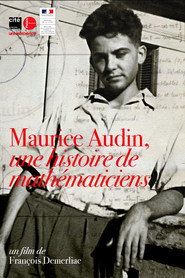

Maurice Audin
Biography
Maurice Audin, born on February 14, 1932, in Béja (Tunisia) and officially declared dead on June 21, 1957, in Algiers, was a French mathematician. An assistant at the University of Algiers, he was a member of the Algerian Communist Party and an activist for Algerian independence. Born in 1932 in Béja, Tunisia—where his father served as a gendarme in the French administration—Audin moved with his family as his father was reassigned to different posts, growing up notably in Aïn Draham and later in Bayonne. He pursued mathematics studies at the University of Algiers, earning a bachelor's degree and a postgraduate diploma; following academic work focused on linear equations in vector spaces, he quickly became an assistant to René de Possel. Audin joined the Algerian Communist Party in 1951, becoming involved in student networks and anti-colonialist solidarity movements. His commitment extended beyond the intellectual sphere: alongside his career as a mathematician, he supported underground activists and helped distribute the communist press. On June 11, 1957, during the "Battle of Algiers," Audin was arrested by paratroopers under the command of General Massu. He was detained and tortured, and never reappeared. His family, as well as many journalists and historians—most notably Pierre Vidal-Naquet—believe he was killed by French paratroopers during interrogation. The French army and state long rejected this account, claiming instead that he had escaped, until General Aussaresses stated that he had ordered Audin to be killed with a knife to make it appear as though he had been murdered by Algerians. France’s first official acknowledgment of Maurice Audin’s death in custody came in 2014 from President François Hollande, though the documents confirming it were not made public at the time. In 2018, President Emmanuel Macron officially acknowledged the responsibility of the French State and the French army for this assassination. Maurice Audin’s memory lives on through the intellectual and moral legacy he left behind, as well as the struggle waged by his loved ones and the scientific community to establish the facts and uphold democratic and humanist values in the face of political violence. Many locations in Algeria and France bear his name, and he is honored at sites of symbolic and commemorative significance; references to Audin serve as a public reminder of the wounds and struggles associated with the Algerian War of Independence. In 2020, the CNRS, the French Embassy in Algeria, and the Algerian Ministry of Higher Education and Scientific Research joined forces to establish, among other initiatives, a mathematics chair in memory of Maurice Audin.